On June 18, 2026, the Department of Justice announced that LOGZONE, Inc., a 26-person defense contractor based in Huntsville, Alabama, agreed to pay $507,144 to resolve its liability under the False Claims Act for knowingly failing to comply with cybersecurity requirements on Department of the Navy contracts.
The settlement wiped out approximately 75 percent of their total gross contract revenue from the affected contracts.
This is not a story about a cyberattack or a data breach. It is a story about a gap between what a contractor claimed and what a government auditor found. And it is a significant enforcement example for every defense contractor preparing for CMMC implementation milestones in 2026 and beyond.
What You Need to Know at a Glance
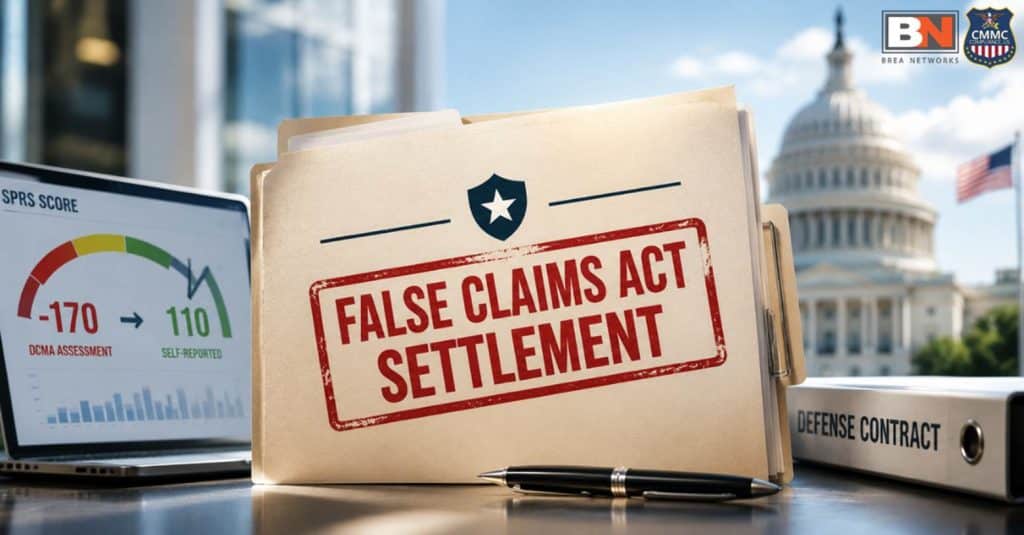
What happened? According to the DOJ press release dated June 18, 2026, LOGZONE allegedly failed to implement required NIST SP 800-171 cybersecurity controls on two Navy contracts between May 2021 and March 2025. When the DCMA DIBCAC conducted an assessment, LOGZONE received a score of -170. Their self-reported SPRS score was 110. According to the DOJ, that discrepancy formed the basis of the False Claims Act allegations.
Why did the DOJ act? According to the DOJ, LOGZONE knowingly submitted false or fraudulent claims for payment and failed to comply with the cybersecurity requirements of its contracts. Under 31 U.S.C. § 3729, the False Claims Act imposes liability on any person who knowingly presents a false or fraudulent claim for payment to the government. The legal exposure did not stem solely from the security gaps. According to the DOJ, it came from misrepresenting compliance status to the government while billing for contract performance.
What should contractors do now? Validate your SPRS score, review your SSP, confirm your POA&M status, verify your annual affirmation readiness, and conduct an independent gap assessment. The action checklist later in this post walks through each step.
The Numbers That Tell the Story
The possible SPRS score range under the DoD scoring methodology is from -203 to 110. According to the DOJ press release, LOGZONE’s DCMA DIBCAC assessment produced a score of negative 170, near the absolute bottom of that range.
LOGZONE’s self-reported score on the SPRS was 110. The maximum possible score. A perfect score.
The distance between those two numbers is not a rounding error or a difference of interpretation. According to the DOJ, it represents a contractor that allegedly claimed full implementation of NIST SP 800-171 while operating in near-total non-compliance for nearly four years. According to the DOJ, that gap formed the basis of the False Claims Act allegations resolved by the settlement.
The financial result: a $507,144 settlement against $682,193.37 in contract revenue. Roughly 75 cents returned to the government for every dollar earned on those contracts.
Why This Enforcement Action Is Significant
The LOGZONE settlement is significant not because of its size, but because of what it reveals about how the DOJ’s Civil Cyber-Fraud Initiative operates in practice.
The initiative, launched in 2021, is built on a specific theory of liability: when a contractor submits false claims for payment while knowingly misrepresenting their cybersecurity compliance posture, that is a False Claims Act violation. Cybersecurity failure is the underlying problem. Misrepresentation is what creates legal exposure.
As Assistant Attorney General Brett A. Shumate stated in the DOJ announcement: “Government contractors that obtain sensitive defense information in administering their contracts must follow required cybersecurity standards. The Justice Department will continue to investigate potential violations of these cybersecurity requirements in order to protect this critical information from external threats.”
DCMA Director Vice Admiral Stephen Tedford added: “The cybersecurity provisions of federal contracts are critical to protecting sensitive information that may be transmitted in carrying out the mission of the contracts. DCMA will continue to ensure that contractors are fulfilling these obligations.”
These are not warnings about future enforcement. They are statements made in connection with a completed settlement. The enforcement is active. The standard is clear.
The SPRS Score Is a Legal Representation
Contractors subject to DFARS 252.204-7019 and DFARS 252.204-7020 are required to have a current NIST SP 800-171 assessment posted in SPRS and are responsible for ensuring the assessment accurately reflects their implementation status. A senior company official must affirm that score.
That affirmation is a legal representation of the government about the actual state of your cybersecurity environment. It is not an estimate. It is not a target. It is not aspirational.
Under 32 CFR § 170.22, annual affirmations of continued compliance are now required as part of the CMMC program. Every year, a senior official must affirm that the organization continues to meet all requirements within its CMMC Assessment Scope. An affirmation submitted while controls have deteriorated, systems have changed, or gaps remain unaddressed creates exactly the kind of exposure the LOGZONE case illustrates.
An honestly submitted low SPRS score creates a compliance problem. An inflated score submitted knowingly creates a legal problem. Those are not the same category of risk.
What DCMA DIBCAC Can Do
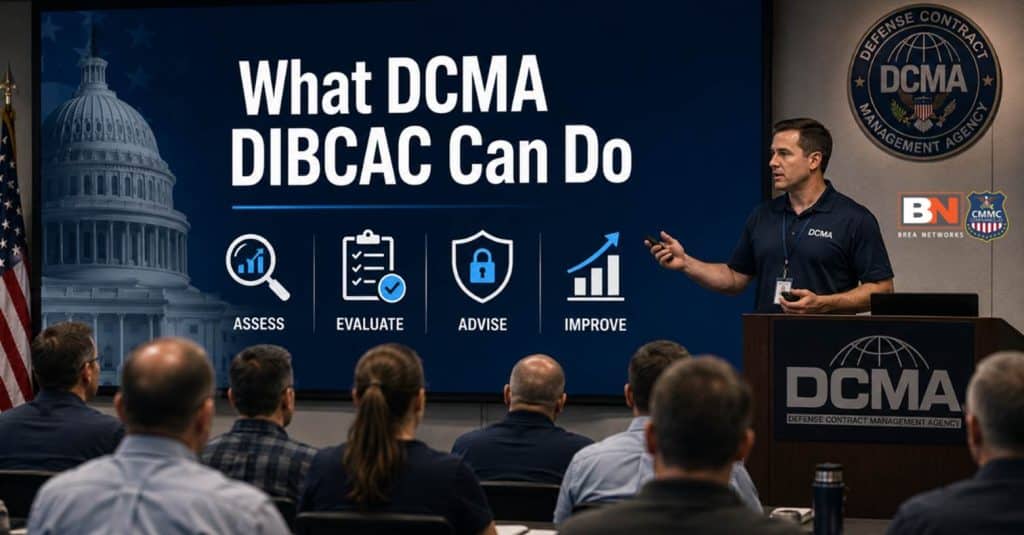
LOGZONE’s gaps were identified when DCMA DIBCAC conducted an assessment. That assessment was not triggered by a breach or a complaint. According to the DOJ announcement, it was an assessment of LOGZONE’s implementation of NIST SP 800-171 security controls.
DFARS 252.204-7020 provides the government authority to conduct or renew higher-level assessments and requires contractors to provide access necessary to support those assessments. Under 32 CFR § 170.18, DIBCAC retains the right to conduct a CMMC Status investigation of any organization, and if a subsequent DIBCAC assessment shows that compliance has not been achieved or maintained, those results take precedence over any pre-existing CMMC Status.
There is no contract size threshold below which this authority does not apply. There is no company size that provides insulation from assessment. LOGZONE had 26 employees. The DOJ acted.
The Central Lesson
The biggest compliance risk is often not the missing control itself. It is inaccurately representing the status of that control to the government. The LOGZONE matter demonstrates that assessment evidence, SSPs, SPRS submissions, and affirmations must all tell the same story.
Security gaps exist in organizations of every size. Gaps identified honestly, documented in a POA&M, and remediated over a defined timeline are a normal part of the compliance process under 32 CFR § 170.21. Gaps that are papered over with an inflated SPRS score while contract billing continues are a False Claims Act problem.
The LOGZONE case did not turn on a technical debate about which controls were or were not implemented. It turned on the gap between what was claimed and what was found. Assessment evidence, SSPs, SPRS submissions, and affirmations must all tell the same story. When they do not, the LOGZONE case shows what the resolution looks like.
Your Action Checklist
The following steps reflect the practical actions defense contractors should take in light of this enforcement action. Each item is sourced to official program requirements.
1. Validate your SPRS score. Your score must reflect the actual state of your NIST SP 800-171 implementation today. If your environment has changed since your last submission, your score requires recalculation. If your score needs to be corrected downward, correct it and submit an accurate score with a current assessment date. Your submission is governed by DFARS 252.204-7019 and made through SPRS.
2. Review your System Security Plan. Your SSP must describe how your organization implements each of the 110 security requirements across all systems within your CMMC Assessment Scope. If your environment has changed since the SSP was last updated, update it now. A C3PAO or DIBCAC assessor will compare your SSP to your actual environment. A mismatch between the two may result in an assessment finding.
3. Confirm your POA&M status. If you have open POA&M items, review them against the requirements of 32 CFR § 170.21. Confirm that items are eligible for POA&M treatment, that remediation timelines are being met, and that your SPRS score accurately reflects the current state of unmet requirements. Open POA&M items that are not actively being remediated represent a gap between your documented posture and your actual environment.
4. Verify your annual affirmation readiness. Under 32 CFR § 170.22, a senior official must affirm continued compliance annually. Before that affirmation is submitted, conduct an internal review of your compliance posture. The official signing the affirmation is making a legal representation about the state of the environment. That representation needs to be accurate and supportable by evidence.
5. Conduct an independent assessment of your NIST SP 800-171 implementation. An honest internal assessment conducted against the DoD CIO CMMC Assessment Guide Level 2 will surface the same gaps a DIBCAC or C3PAO assessor will find. Identifying those gaps on your own timeline gives you the opportunity to remediate before an assessment creates a formal record. The DoD CIO CMMC Scoping Guide Level 2 defines the scope of that assessment. Both documents are publicly available at no cost through the DoD CIO CMMC Documentation page.
6. Consult qualified legal counsel regarding potential disclosure obligations. If your organization has reason to believe that prior SPRS submissions did not accurately reflect your compliance posture, consult qualified legal counsel regarding potential disclosure obligations and available options. The LOGZONE case demonstrates what unaddressed discrepancies can cost.
What This Means for Phase 2
The timing of the LOGZONE settlement provides a notable enforcement example as contractors prepare for upcoming CMMC implementation milestones. Phase 2 enforcement begins November 10, 2026, under 32 CFR Part 170 and will introduce C3PAO certification requirements for most CUI-handling contracts under 32 CFR § 170.17. That process will produce a second dataset of assessment results sitting alongside existing SPRS self-assessment scores. When those two records do not align, the government will have a documented and traceable discrepancy.
The government has now demonstrated, in a publicly announced settlement involving a small SDVOSB defense contractor, that False Claims Act enforcement for cybersecurity misrepresentation applies to organizations of any size on any contract. For defense contractors who have not yet conducted an honest gap assessment against NIST SP 800-171 Revision 2, the LOGZONE settlement is a clear signal that the time to do that work is now.
Assessment evidence, SSPs, SPRS submissions, and affirmations must all tell the same story. When they do not, the LOGZONE case shows what the resolution looks like.

How CMMCCompliance.US Can Help
The LOGZONE case illustrates a problem we see across the defense industrial base: the gap between a contractor’s documented compliance posture and their actual security implementation. That gap does not usually appear because an organization intended to misrepresent its posture. It appears to be due to compliance being treated as a document exercise rather than an operational one, to environments changing without documentation being updated, or to no one having conducted an honest, independent review of where the organization actually stood against the 110 requirements in NIST SP 800-171.
That is exactly the work CMMCCompliance.US does.
We are a CMMC Level 2 certified RPO, MSP, and MSSP trusted by 100+ DoW contractors nationwide. We help defense contractors across the DIB build security programs that are real, documented, and defensible, not just on assessment day, but on every day a senior official signs an annual affirmation, every day a contract is being billed, and every day a contracting officer or DIBCAC assessor might decide to take a closer look.
Our services are built around the same standards as C3PAO or DIBCAC will apply when they evaluate your environment. We work from the CMMC Assessment Guide Level 2, the CMMC Scoping Guide Level 2, and NIST SP 800-171 because those are the documents that govern what passes and what does not.
Mock Assessment: We conduct a realistic pre-assessment of your environment against the same assessment objectives a C3PAO will use. We tell you exactly where you stand, what your current SPRS score should be, and what gaps need to be closed before you engage a C3PAO. Think of it as finding the negative 170 yourself before DIBCAC does.
SSP Development and Review: We build or review your System Security Plan to ensure it accurately reflects your actual environment, maps correctly to each security requirement, and will hold up under assessor scrutiny. An SSP that does not match your environment is not a compliance document. It is a liability.
POA&M Management: We help you build and maintain a Plan of Action and Milestones that meet the requirements of 32 CFR § 170.21, accurately track remediation progress, and keep your SPRS score honest. We make sure your POA&M and your SPRS submission tell the same story.
SPRS Score Validation: We review your current SPRS submission against your actual control implementation and help you understand whether your score accurately reflects where you are. If your score needs to be corrected, we can help you do so with documentation to support the revised submission.
C3PAO Preparation: We prepare your organization for a certification assessment from the ground up, ensuring your evidence package, SSP, and operational controls are ready for the examination, interview, and test methodology a C3PAO will apply across every assessment objective.
MSSP — Continuous Compliance Monitoring: We work with organizations between assessments to maintain the documentation, evidence, security monitoring, and control effectiveness required by annual affirmations. Compliance does not end on assessment day. Neither does our support.
ITAR Compliance Services: For contractors handling export-controlled technical data, we help ensure your ITAR obligations are met alongside your CMMC program, so both compliance tracks are covered by a single integrated approach.
GCC and GCC High Migration: For contractors moving to a Microsoft government cloud environment to support their CMMC assessment scope, we provide GCC and GCC High migration services aligned to DoW requirements and DFARS 252.204-7012 obligations.
The LOGZONE settlement is a reminder that the cost of getting compliance wrong is not just operational. It is financial, legal, and reputational. The cost of getting it right, with the right partner and the right process, is a fraction of what LOGZONE paid.
If your organization is ready to close the gap between where you are and where you need to be, we are ready to help.
The claims resolved by the LOGZONE settlement are allegations only, and no determination of liability has been made, as stated in the DOJ press release.