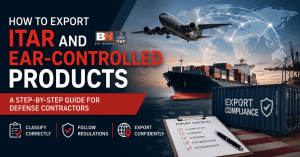
The Role of ITAR in National Security

In an era marked by rapid technological advancement and shifting geopolitical landscapes, the regulation of defense-related exports is more vital than ever. The International Traffic in Arms Regulations (ITAR) stands as a cornerstone of U.S. national security policy, governing the export and import of military-related articles and services. Understanding ITAR is essential not only for…

Details

CMMC Compliance GAO Report Explained for Defense Contractors

Cybersecurity has become one of the most critical priorities for the U.S. defense supply chain. As cyber threats targeting defense contractors continue to grow, the U.S. government has introduced the CMMC program to strengthen protection of sensitive information. A recent Government Accountability Office (GAO) report examines how the Department of Defense is implementing CMMC and…

Details

ITAR Registration Requirements: Who Must Register with DDTC

Many companies working in the defense industry assume that ITAR registration only applies to large defense manufacturers or organizations exporting weapons systems overseas. The requirement applies much more broadly. Under ITAR, companies involved in the manufacture, export, or provision of defense services related to controlled technologies may be required to register with the U.S. Department…

Details
CMMC

Vendor Flow Downs: What Contractors Must Require from Their Vendors

Vendor Flow Downs: What Contractors Must Require from Their Vendors Many contractors focus heavily on their own cybersecurity requirements when preparing for CMMC or DFARS compliance. However, a major part of compliance often sits outside the organization. It sits in the vendor and subcontractor network. If a vendor handles Federal Contract Information (FCI) or Controlled…

Details
ITAR

ITAR Country Risks for Contractors

What are ITAR Country Restrictions For many defense contractors, ITAR compliance risks do not start with weapons systems or export shipments. They begin with who can access controlled information and where that information may be transferred.  ITAR places strict limits on sharing defense technologies, technical data, and defense services with certain countries and foreign people.…

Details

Deemed Exports Under ITAR

Many organizations believe ITAR only applies when shipping products overseas. That assumption is dangerous. Under ITAR, you can violate export laws without shipping anything at all. Simply allowing a foreign national to access controlled technical data inside the United States can be considered an export. This is called a deemed export. If your company handles…

Details